
De Burgos Bengoetxea firma un arbitraje casi perfecto en el Barcelona – Atlético pese a seis jugadas polémicas.
El Barcelona – Atlético de Madrid que decidió la eliminatoria dejó hasta seis acciones polémicas que generaron un enorme debate durante y después del encuentro. El partido terminó 3-0 para el Barcelona, sin llegar a remontar el 4-0 de la ida del Atlético de Madrid, en un encuentro de máxima tensión competitiva. En ese contexto, el arbitraje de Ricardo de Burgos Bengoetxea fue, en líneas generales, de altísimo nivel.
El colegiado vasco resolvió correctamente cuatro de las cinco acciones más relevantes del partido sobre las que él tuvo poder y únicamente dejó una decisión discutible que evitó que su actuación alcanzara el sobresaliente. Aun así, su dirección del encuentro puede considerarse una de las mejores vistas esta temporada en un partido de tanta exigencia.
Penalti claro de Marc Pubill sobre Pedri
La primera acción polémica llegó en la primera parte con el penalti señalado sobre Pedri. El centrocampista del Barcelona se interna en el área y Marc Pubill intenta interceptar el balón colocando la pierna por delante de la trayectoria del jugador azulgrana. El contacto en la pierna izquierda de Pedri provoca su caída dentro del área y De Burgos Bengoetxea señala correctamente el penalti. La decisión es clara y no requiere tarjeta, ya que el atacante se encontraba rodeado de defensores y no existía una ocasión manifiesta de gol.
⁉️💥 ¿Es penalti la acción de Marc Pubill sobre Pedri?
✅ 𝗦𝗜.
👉🏻 El defensor del Atlético de Madrid, en su intento de llegar al balón, traba a Pedri dentro del área.
▪️ De Burgos Bengoetxea apreció la infracción en directo y el VAR confirmó la pena máxima. pic.twitter.com/k3jMjk1pFz
— Archivo VAR (@ArchivoVAR) March 3, 2026
¿Gol legal de Marc Bernal?
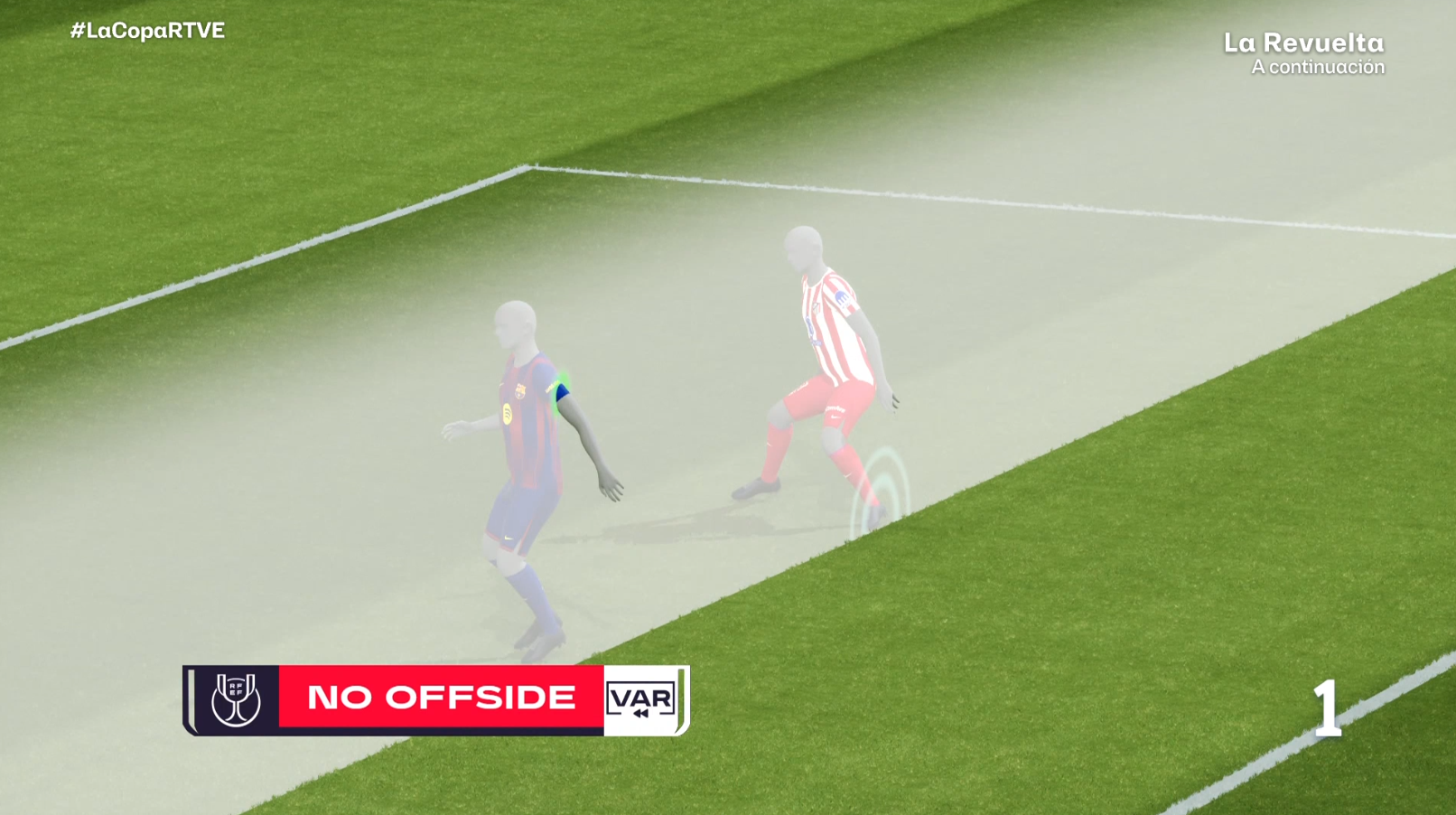
La segunda acción llegó ya en la segunda mitad con el gol de Marc Bernal que fue validado tras revisión del VAR. Se trata de una jugada extremadamente difícil de analizar con las imágenes disponibles, ya que en muchas tomas no se aprecia con claridad la posición del pie del último defensor del Atlético. La representación gráfica del fuera de juego mostró una situación muy ajustada en la que una pequeña parte de la manga del jugador azulgrana aparecía adelantada respecto al defensor. El VAR interpretó que esa zona no constituía superficie válida para marcar gol y validó la acción. La decisión puede generar debate, pero con las imágenes actuales resulta imposible desmentirla con certeza.
¿Segunda amarilla para Joao Cancelo?
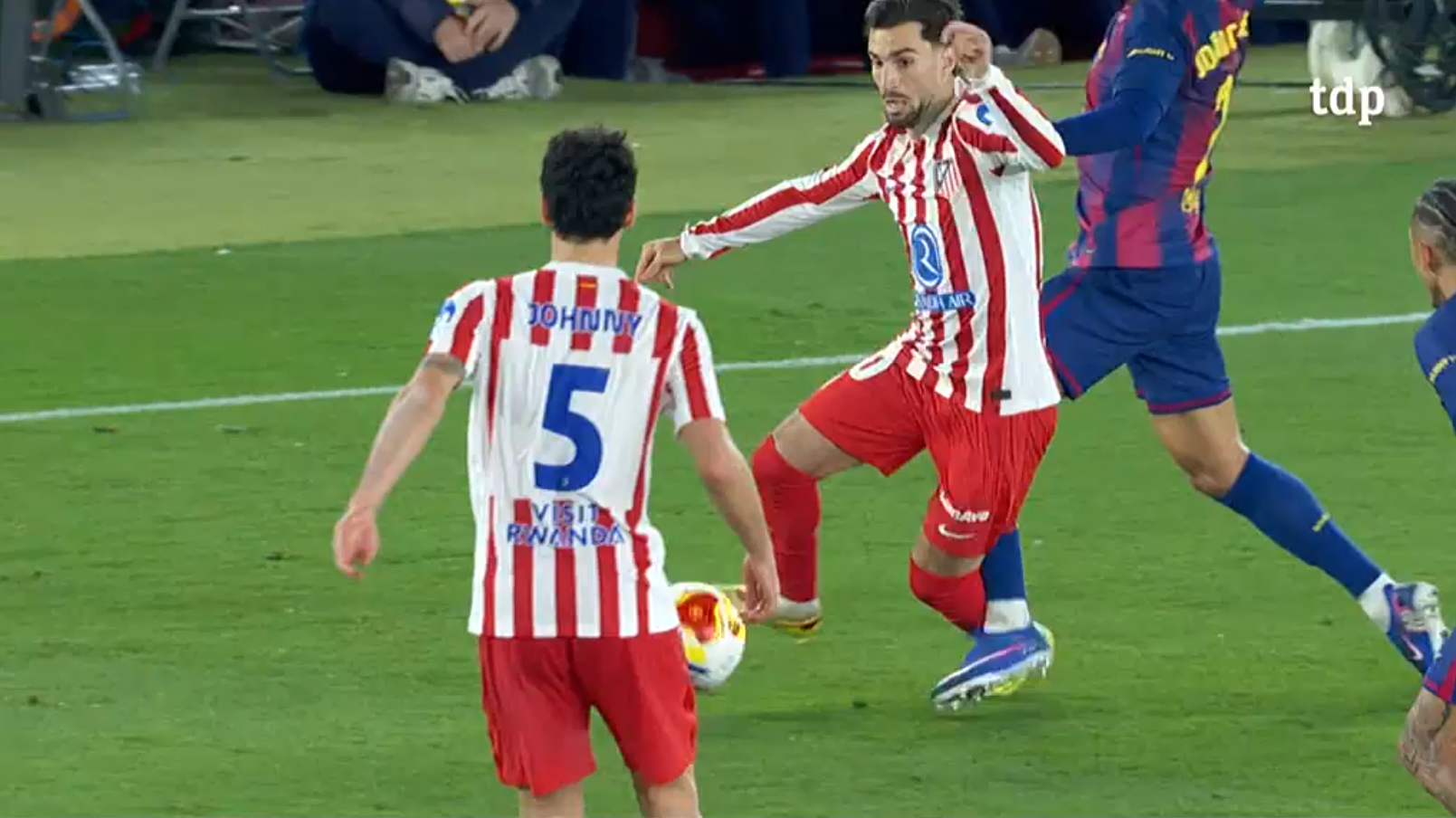
El Atlético también reclamó una segunda amarilla para João Cancelo tras una falta sobre Álex Baena. Sin embargo, la acción no está ni cerca de constituir una segunda amonestación. Se trata de un contacto normal en la disputa del balón que termina derribando al jugador rojiblanco, pero sin intensidad ni imprudencia suficiente para una tarjeta.
Segunda amarilla al límite para Dani Olmo
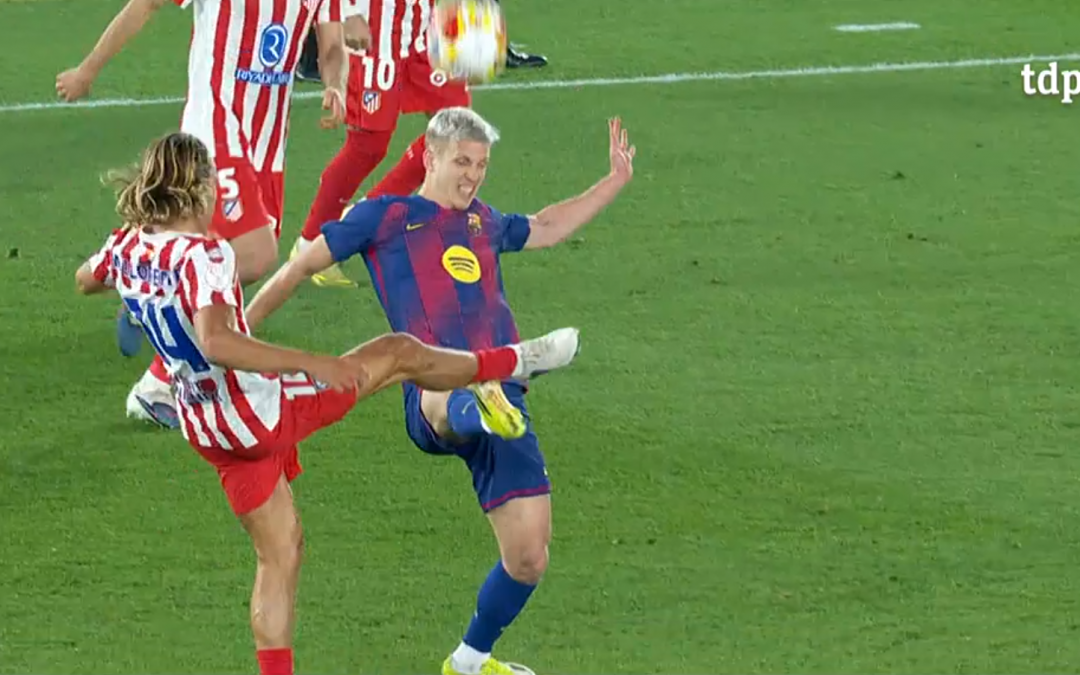
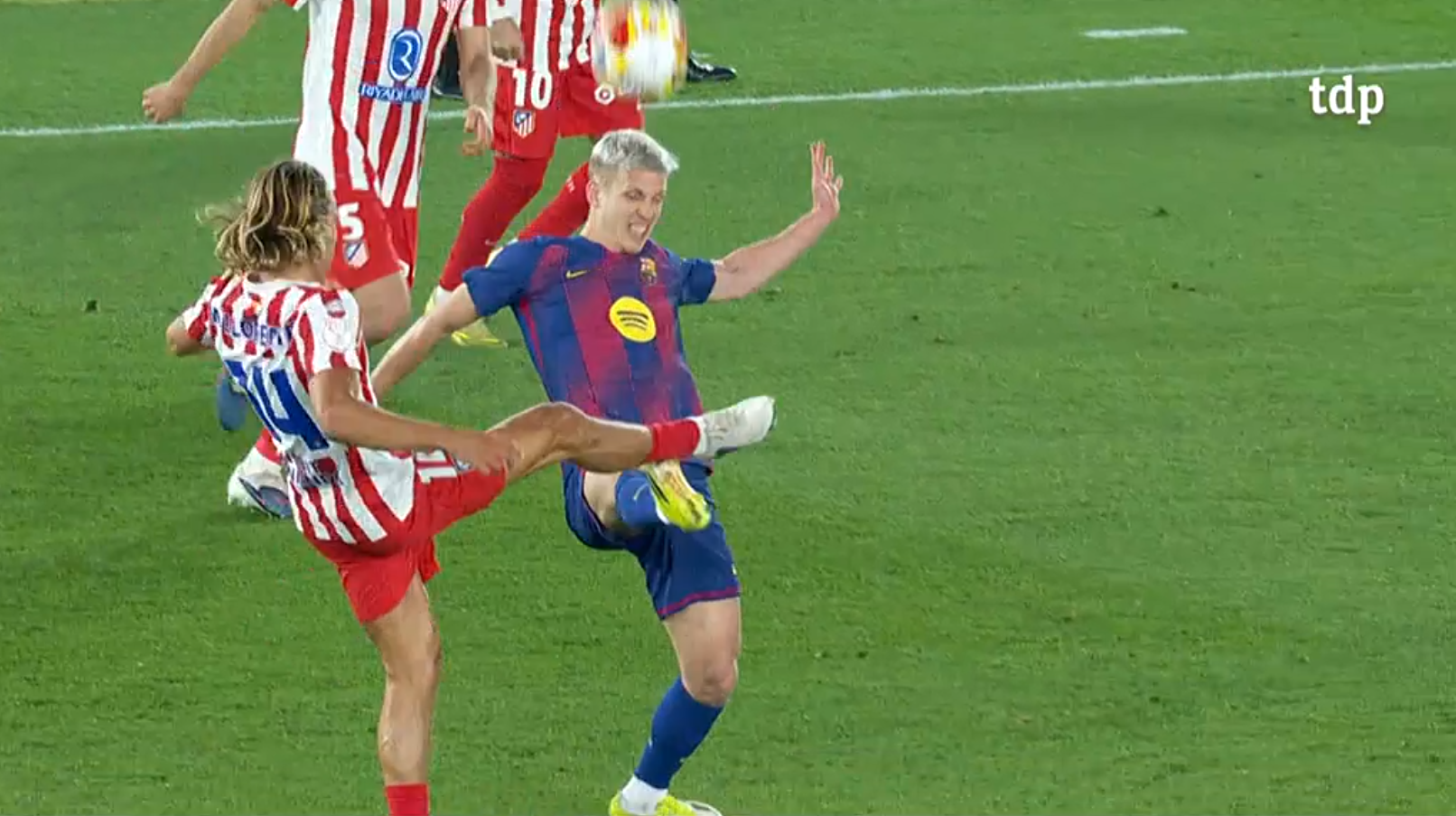
La jugada más discutida del partido llegó poco después con la posible segunda amarilla para Dani Olmo. El mediapunta intenta disputar un balón que previamente despeja Marcos Llorente y termina impactando con la plancha en el tobillo del jugador del Atlético. La imagen en parado puede parecer dura, pero el contacto se produce en el aire y con una intensidad moderada. Es una acción extremadamente gris: muchos árbitros habrían mostrado la segunda amarilla, pero también es defendible no hacerlo si se mantiene un criterio permisivo en los contactos durante todo el encuentro. De Burgos Bengoetxea optó por esta segunda vía y mantuvo el criterio que había aplicado durante todo el partido.
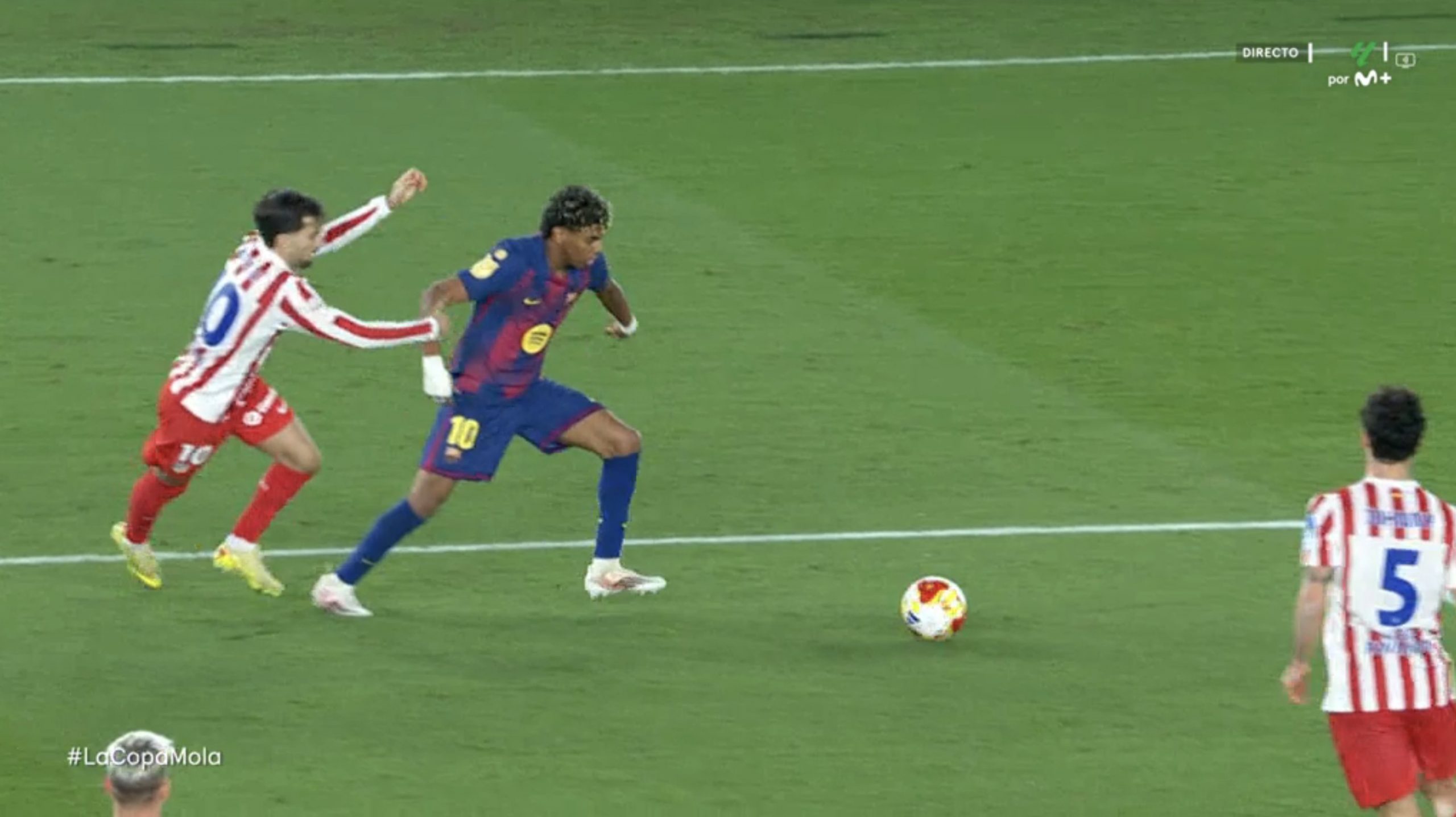
¿Penalti de Baena sobre Lamine Yamal?
La quinta acción llegó con un posible penalti sobre Lamine Yamal. El extremo azulgrana se interna en el área y Baena le agarra ligeramente de la muñeca durante una fracción de segundo. El contacto existe, pero es mínimo y no genera una tracción clara que impida continuar la jugada. Yamal se deja caer de forma muy exagerada y el árbitro acierta al no señalar penalti.
Hancko se la jugó en la última acción del partido
La última jugada polémica se produjo ya en los minutos finales con una posible falta sobre Raphinha en un centro al área. El atacante intenta rematar un balón alto y recibe una ligera carga por detrás de Hancko. No se aprecia un empujón claro con las manos, sino más bien un contacto leve propio de la disputa aérea. Son acciones en las que el defensor se la juega, porque si el árbitro señala penalti el VAR no suele intervenir, pero en este caso la intensidad del contacto no parece suficiente para sancionarlo.
⁉️💥 ¿Da para penalti la acción de Ruggeri sobre Raphinha?
✅ 𝗡𝗢.
👉🏻 El defensor del Atlético de Madrid carga ligeramente al brasileño, sin que se produzca un empujón evidente y de intensidad.
▪️ Si bien el italiano se la jugó, la acción no da para pena máxima. pic.twitter.com/sRolCsX4Y4
— Archivo VAR (@ArchivoVAR) March 3, 2026
Balance total: Casi sobresaliente para De Burgos Bengoetxea
En conjunto, el partido dejó muchas acciones al límite y un ambiente de enorme presión competitiva, pero De Burgos Bengoetxea supo manejar el encuentro con personalidad. Mantuvo el mismo criterio durante los 90 minutos, evitó detener constantemente el juego por protestas y permitió que el partido tuviera ritmo.
Salvo por la jugada de Dani Olmo, que queda en ese terreno gris donde cualquier decisión puede ser defendible, el arbitraje fue prácticamente impecable. En un partido de semejante exigencia, su actuación puede situarse sin duda entre las tres mejores de la temporada.
🇬🇧 Read full English version
De Burgos Bengoetxea delivers an almost flawless refereeing performance in Barcelona – Atlético despite six controversial incidents
The Barcelona – Atlético de Madrid match that decided the tie featured as many as six controversial incidents that sparked intense debate during and after the game. Barcelona won 3–0 but were unable to overturn Atlético’s 4–0 advantage from the first leg in what was an extremely tense encounter. In that context, the refereeing performance of Ricardo de Burgos Bengoetxea was, overall, of a very high standard.
The Basque referee made the correct decision in four of the five most important incidents in which he had direct responsibility, and only one debatable call prevented his performance from reaching an outstanding level. Even so, his management of the match can be considered one of the best refereeing displays seen this season in such a demanding fixture.
Clear penalty by Marc Pubill on Pedri
The first controversial moment came in the first half with the penalty awarded to Pedri. The Barcelona midfielder drives into the penalty area and Marc Pubill attempts to intercept the ball by placing his leg across the path of the attacker. The contact on Pedri’s left leg causes him to fall inside the box and De Burgos Bengoetxea correctly points to the penalty spot.
The decision is clear and does not require a card, as the attacker was surrounded by several defenders and there was no obvious goal-scoring opportunity.
Was Marc Bernal’s goal legal?
The second major incident occurred in the second half when Marc Bernal’s goal was confirmed after a VAR review. It is an extremely difficult situation to analyse with the available images, as in many angles the position of the last Atlético defender’s foot cannot be clearly seen.
The offside graphic showed a very tight situation in which a small part of the Barcelona player’s sleeve appeared ahead of the defender. VAR interpreted that this part of the body does not count as a playable scoring surface and therefore validated the goal. The decision may generate debate, but with the current images it is impossible to disprove it with certainty.
Second yellow card for João Cancelo?
Atlético also appealed for a second yellow card for João Cancelo after a foul on Álex Baena. However, the incident is nowhere near deserving a second caution. It is a normal challenge for the ball that ends with the Atlético player falling, but without the intensity or recklessness required for a booking.
Dani Olmo’s possible second yellow card
The most debated moment of the match arrived shortly afterwards with a potential second yellow card for Dani Olmo. The attacking midfielder attempts to challenge for a ball that Marcos Llorente had previously cleared and ends up making contact with his studs on the Atlético player’s ankle.
The still image may look harsh, but the contact occurs in the air and with moderate intensity. It is an extremely grey situation: many referees would have shown the second yellow card, but it is also defensible not to do so if a permissive threshold for physical contact is maintained throughout the match. De Burgos Bengoetxea chose this second approach and remained consistent with the standard he had applied during the entire game.
Penalty by Baena on Lamine Yamal?
The fifth controversial incident came with a possible penalty involving Lamine Yamal. The Barcelona winger enters the penalty area and Baena briefly holds his wrist for a fraction of a second. The contact exists but is minimal and does not create enough pulling force to prevent the play from continuing.
Yamal goes down in a very exaggerated manner and the referee is correct not to award a penalty.
Hancko took a risk in the final moments
The final controversial moment occurred late in the match with a possible foul on Raphinha during a cross into the box. The attacker attempts to head the ball and receives a slight challenge from behind by Hancko.
There is no clear push with the hands, but rather a light contact typical of an aerial duel. These are situations where defenders take a risk, because if the referee awards a penalty VAR usually does not intervene. In this case, however, the intensity of the contact does not appear sufficient to punish.
Overall assessment: almost outstanding for De Burgos Bengoetxea
Overall, the match featured several borderline situations and an atmosphere of enormous competitive pressure, yet De Burgos Bengoetxea managed the game with authority. He maintained the same refereeing threshold throughout the 90 minutes, avoided stopping play constantly due to protests, and allowed the game to flow.
Aside from the Dani Olmo incident — which sits in that grey area where either decision could be defended — the refereeing was practically impeccable. In a match of such difficulty, his performance undoubtedly ranks among the three best officiating displays of the season.