
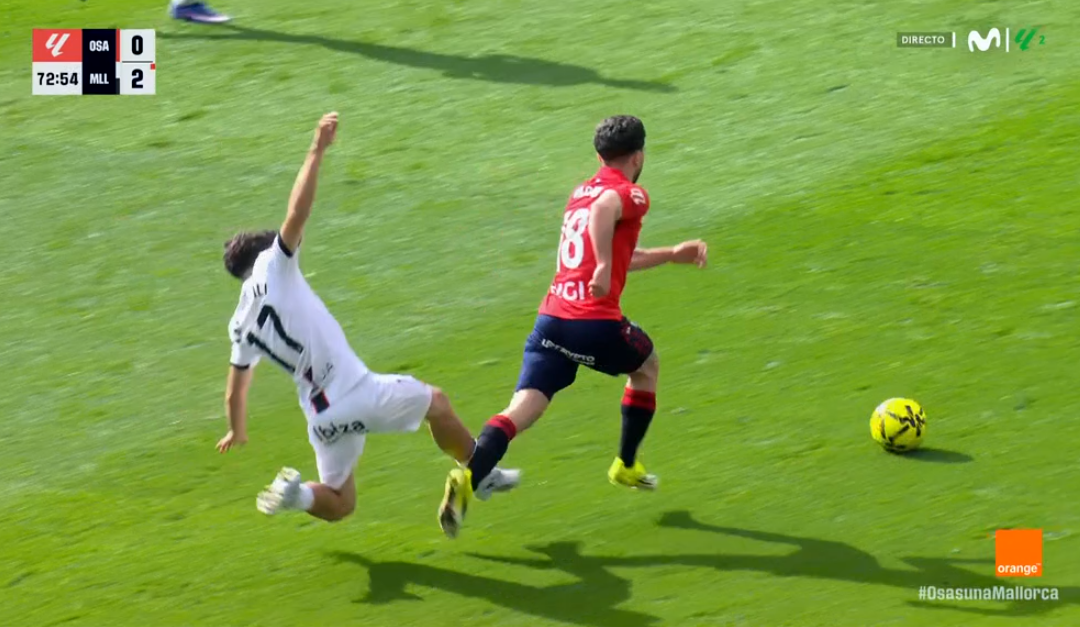
La Liga se dispara en tarjetas rojas: más del doble que la Premier y muy por encima del resto de Europa.
La Liga española vuelve a situarse en el centro del debate arbitral tras alcanzar una cifra de expulsiones que no tiene comparación en el resto de grandes campeonatos europeos. Tras disputarse 27 jornadas del campeonato, el número de tarjetas rojas mostradas en LaLiga EA Sports asciende ya a 72, una cifra que incluye también las tres expulsiones vistas en la jornada del sábado en los partidos de Osasuna, Real Mallorca y Levante. Dos de esas tarjetas fueron muy claras, pero la mostrada a Jan Virgili vuelve a evidenciar que existe un problema de criterio con las expulsiones en el fútbol español.
LaLiga EA Sports: 72 tarjetas rojas
El dato resulta especialmente llamativo cuando se compara con el resto de ligas europeas. Mientras que en España se han mostrado ya 72 tarjetas rojas, contando expulsiones directas y segundas amarillas, la Premier League inglesa acumula únicamente 31 en el mismo punto de la temporada. Es decir, la liga española prácticamente duplica las expulsiones de la competición inglesa. La diferencia es tan grande que resulta difícil explicarla únicamente por el estilo de juego o la intensidad de los partidos.
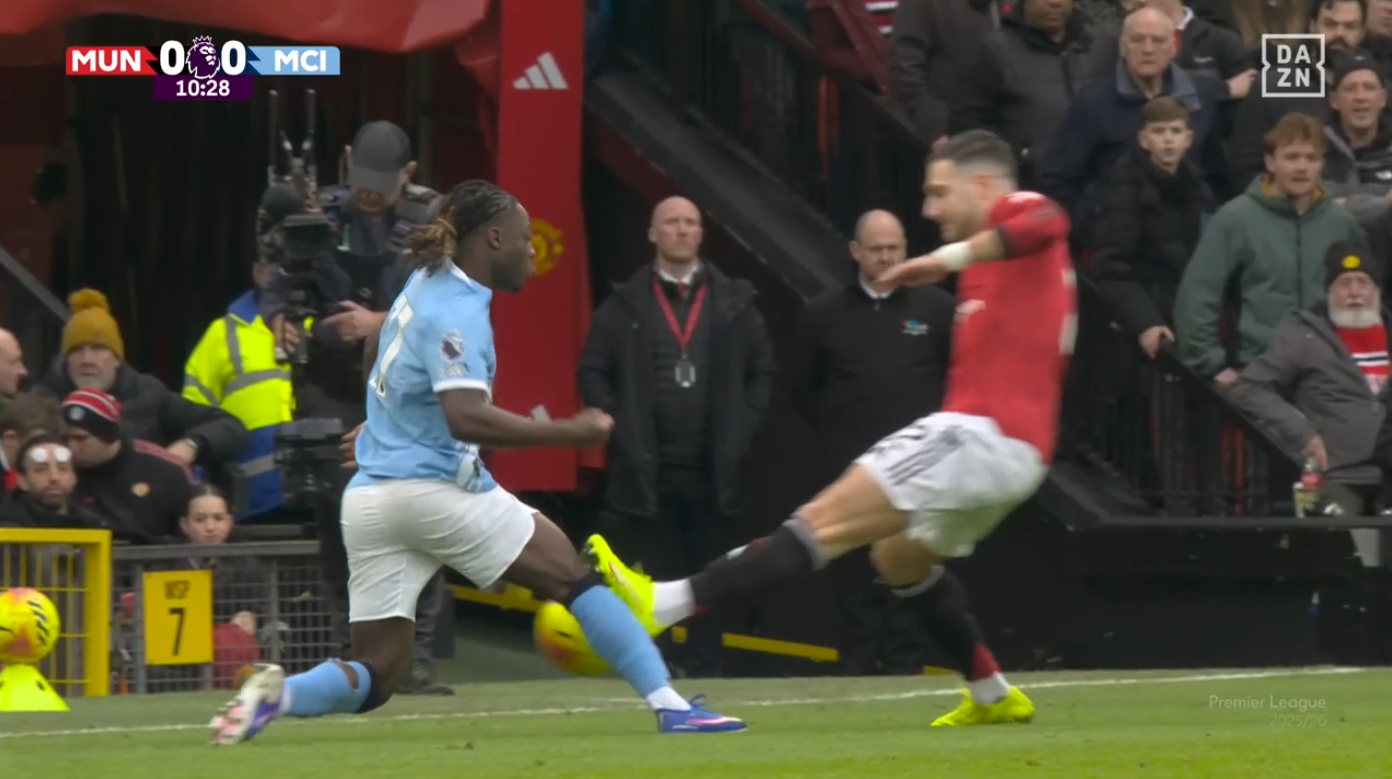
Premier League: 31 tarjetas rojas
El Comité Técnico de Árbitros suele justificar este tipo de cifras apelando a la necesidad de proteger la integridad de los jugadores, un argumento recurrente en el discurso arbitral español. Sin embargo, ese argumento pierde peso cuando se observan algunas decisiones recientes. En el último Real Madrid – Getafe, por ejemplo, se produjo una agresión de Antonio Rüdiger con un rodillazo en la mandíbula a un rival que estaba en el suelo, una acción potencialmente peligrosa que podría haber causado una lesión grave y que, sin embargo, no fue sancionada con tarjeta roja. Si el criterio realmente fuese proteger a los jugadores, jugadas de ese tipo deberían castigarse con la máxima contundencia.
El problema, por tanto, no parece estar en una mayor protección del futbolista, sino en un criterio arbitral que en España se ha desajustado con respecto al resto de Europa. En muchas ocasiones las expulsiones llegan por acciones que en otras ligas se resuelven con tarjeta amarilla o incluso con simple falta, mientras que otras jugadas claramente violentas pasan sin castigo disciplinario severo. Esa falta de coherencia provoca una sensación de arbitraje imprevisible que acaba reflejándose en las estadísticas.
El resto de ligas europeas, muy por debajo
Si ampliamos la comparación al resto de grandes campeonatos europeos, la diferencia continúa siendo muy significativa. En la Ligue 1 francesa se han mostrado hasta ahora 56 tarjetas rojas, una cifra considerable pero que se sitúa en un punto intermedio entre la liga española y el resto de competiciones. Por otro lado, en Italia, la Serie A acumula 34 expulsiones, un número muy similar al de la Premier League pese a tratarse de un campeonato con un estilo táctico muy distinto. En Alemania, la Bundesliga presenta cifras prácticamente idénticas, con 32 tarjetas rojas en lo que va de temporada.
En otras palabras, mientras las principales ligas europeas se mueven en una horquilla aproximada de 30 a 35 expulsiones, la liga española ha superado ya las setenta, más del doble que muchas de sus competidoras directas. Incluso la Ligue 1, que tradicionalmente suele registrar más expulsiones que otros campeonatos, sigue quedándose muy por debajo de los números españoles.
45 rojas directas en LaLiga EA Sports frente a 21 de la Premier League
El análisis también resulta llamativo cuando se observan las expulsiones directas. De las 72 tarjetas rojas mostradas hasta ahora en LaLiga, 45 han sido rojas directas, un número extremadamente alto para este punto de la temporada. Si se compara con la Premier League, donde se han mostrado 21 expulsiones directas, la diferencia vuelve a ser abismal.
Otro dato interesante aparece al proyectar la tendencia actual hasta el final del campeonato. Con 72 expulsiones en 27 jornadas, la media actual es de aproximadamente 2,67 tarjetas rojas por jornada. Si ese ritmo se mantuviera hasta el final de la temporada, 38 jornadas en total, LaLiga EA Sports terminaría con alrededor de 101 tarjetas rojas.
¿Cuál es el récord desde la introducción del VAR?
La cifra quedaría por debajo del récord histórico reciente, establecido en la temporada 2022-2023 con 137 expulsiones, pero seguiría siendo un número muy elevado y muy superior al de la mayoría de ligas europeas. Aquel récord llegó en un momento en el que el VAR llevaba ya varias temporadas implantado y se aplicaron criterios muy estrictos en acciones de juego peligroso. Sin embargo, en las campañas posteriores el propio CTA decidió rebajar ligeramente ese listón y las cifras descendieron considerablemente: 89 expulsiones en la temporada siguiente y 77 en la posterior. Ahora, con el nuevo comité arbitral, la tendencia vuelve a subir.
Las estadísticas, en cualquier caso, dejan una conclusión clara. Mientras el resto de ligas europeas mantienen cifras relativamente similares entre sí, el campeonato español vuelve a destacar por una inflación de tarjetas rojas que no tiene equivalente en las otras grandes competiciones. La explicación oficial seguirá siendo la protección del futbolista, pero los números y algunos episodios recientes invitan a pensar que el verdadero problema está en un criterio arbitral que en España sigue sin encontrar un equilibrio claro.
🇬🇧 Read full English version
La Liga red cards surge: more than double the Premier League and far above the rest of Europe
Spanish football has once again moved to the center of refereeing debate after reaching a number of red cards that has no equivalent among Europe’s major leagues. After 27 rounds of the season, LaLiga EA Sports has already produced 72 red cards, including the three dismissals shown during Saturday’s matches involving Osasuna, Real Mallorca and Levante. Two of those red cards were clear, but the one shown to Jan Virgili once again highlights the ongoing issue surrounding refereeing criteria in Spanish football.
LaLiga EA Sports: 72 red cards
The figure becomes particularly striking when compared with other European leagues. While Spanish football has already seen 72 red cards – counting both straight reds and second yellow cards – the English Premier League has recorded only 31 at the same stage of the season. In other words, the Spanish top flight has almost doubled the number of expulsions seen in England. The difference is so significant that it cannot easily be explained by playing style or match intensity alone.
Premier League: 31 red cards
The Spanish Technical Committee of Referees often justifies these numbers by claiming that the priority is protecting the physical integrity of players, a recurring argument in Spanish refereeing discourse. However, that reasoning loses strength when looking at some recent decisions. In the latest Real Madrid vs Getafe match, for example, Antonio Rüdiger delivered a knee to the jaw of an opponent lying on the ground – a potentially dangerous act that could have caused serious injury – yet the incident was not punished with a red card. If the true objective were to protect players, situations like that should be sanctioned with maximum severity.
The real issue therefore does not appear to be greater protection for players, but rather a refereeing standard in Spain that has become misaligned with the rest of Europe. In many cases, dismissals occur for incidents that in other leagues would be resolved with a yellow card or even just a foul, while other clearly violent actions go unpunished. This lack of consistency creates a sense of unpredictability in refereeing decisions, something that is clearly reflected in the statistics.
The rest of Europe far behind
If the comparison is extended to the rest of Europe’s major leagues, the gap remains significant. France’s Ligue 1 has recorded 56 red cards so far this season, a notable figure but still positioned midway between Spain and the rest of the competitions. In Italy, Serie A has produced 34 red cards, a number very similar to the Premier League despite the different tactical nature of the competition. Germany’s Bundesliga shows almost identical figures, with 32 red cards so far this season.
In other words, while most major European leagues operate within a range of roughly 30 to 35 red cards, Spanish football has already surpassed seventy – more than double many of its closest competitors. Even Ligue 1, traditionally one of the competitions with the highest number of dismissals, still sits well below the Spanish figures.
45 straight red cards in LaLiga vs 21 in the Premier League
The contrast becomes even clearer when focusing only on straight red cards. Out of the 72 dismissals shown so far in LaLiga, 45 have been direct red cards – an extremely high number for this stage of the season. In comparison, the Premier League has produced just 21 straight red cards, once again highlighting the enormous gap between the two competitions.
Projected numbers for the end of the season
The trend becomes even more interesting when projecting the current average until the end of the season. With 72 dismissals in 27 rounds, LaLiga currently averages approximately 2.67 red cards per matchday. If that rhythm were to continue through the entire 38-match schedule, the Spanish league would finish the season with around 101 red cards.
What is the record since the introduction of VAR?
This number would still remain below the recent record established during the 2022–2023 season, when Spanish football registered 137 red cards. That peak occurred when VAR had already been fully integrated and referees applied extremely strict criteria regarding dangerous play.
In the seasons that followed, however, the refereeing authorities slightly relaxed those standards and the numbers dropped considerably: 89 red cards the following season and 77 in the campaign after that. Now, with a new refereeing leadership structure in place, the trend appears to be rising again.
In any case, the statistics point to a clear conclusion. While the rest of Europe’s major leagues maintain relatively similar figures, the Spanish championship once again stands out for an inflation of red cards that has no real equivalent in other top competitions. The official explanation will continue to be the protection of players, but the numbers – and several recent incidents – suggest that the real issue lies in a refereeing standard that still struggles to find balance in Spanish football.