
El CTA manda a la nevera a Pizarro Gómez… pero con retraso tras designarle para el partido más importante de la pasada jornada.
El Comité Técnico de Árbitros vuelve a protagonizar una decisión difícil de explicar que alimenta aún más la sensación de desorden que rodea actualmente al arbitraje español. El caso de Pizarro Gómez, árbitro de VAR en el polémico Real Madrid – Getafe, ha terminado con el colegiado camino de la nevera… pero con retraso. Y ese detalle cambia completamente la lectura de lo ocurrido. Porque por primera vez en toda la temporada un árbitro que comete un error grave no es apartado inmediatamente de las designaciones, sino que se le permite seguir arbitrando una jornada más antes de cumplir la sanción.
La información la adelantó Juanfe Sanz, periodista de El Chiringuito, quien explicó que Pizarro Gómez sí acabaría siendo enviado a la nevera tras su designación para el Athletic Club – Barcelona. Sin embargo, lo haría únicamente después de cumplir las dos designaciones que ya tenía asignadas. Es decir, el CTA decidió que el árbitro madrileño participara con normalidad en los partidos para los que ya estaba programado y que la sanción llegara posteriormente.
La explicación que se dejó caer desde el entorno arbitral fue sencilla: el árbitro ya tenía partidos designados y por tanto los iba a cumplir. Pero esa excusa se cae por su propio peso si se revisa lo ocurrido en las últimas semanas. El propio CTA ha demostrado varias veces que cuando un árbitro comete un error grave, tener partidos asignados no es ningún impedimento para retirarle inmediatamente de las designaciones.
El CTA retiró sus partidos ya asignados a Gálvez Rascón
El ejemplo más reciente es el de Gálvez Rascón. Hace apenas dos semanas, el árbitro cometió un error grave en el Girona – Barcelona disputado en lunes. El CTA actuó con rapidez y le retiró los partidos que ya tenía designados para el fin de semana siguiente. Exactamente la misma situación que ahora… pero con una respuesta completamente diferente.
Algo parecido ocurrió también con el árbitro del Real Madrid – Real Sociedad, que tras una actuación muy cuestionada también perdió sus designaciones de la jornada posterior aunque no estuvieran asignadas ya. Es decir, el CTA ya había demostrado que cuando quiere actuar con contundencia lo hace sin ningún problema, tenga o no el colegiado los encuentros próximos asignados.
El error más peligroso de toda la temporada
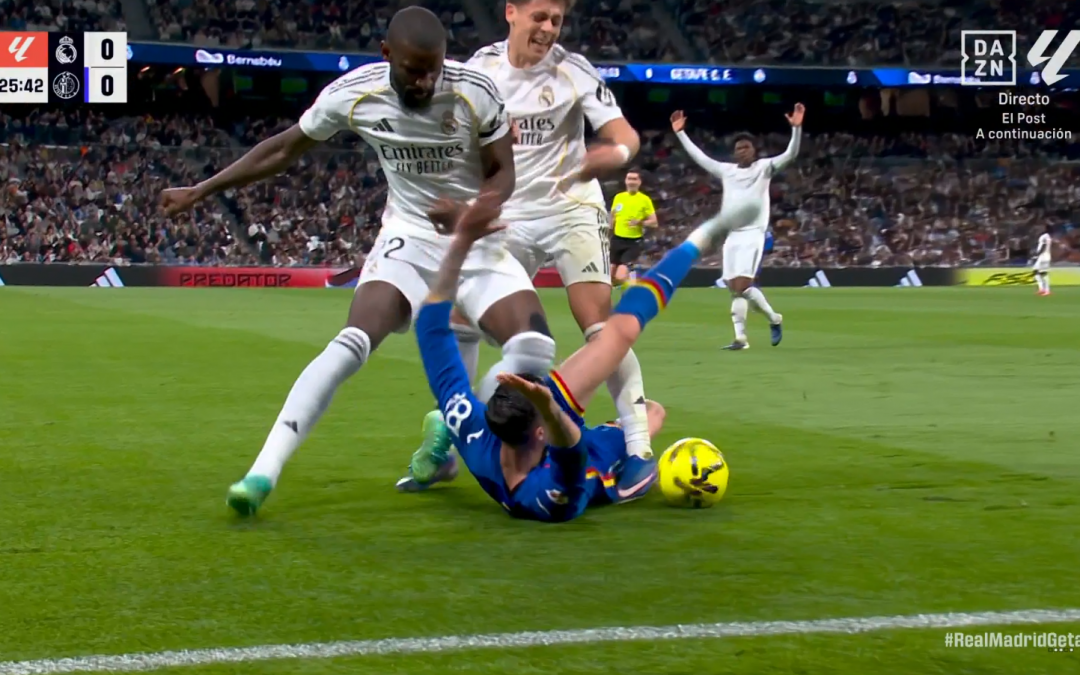
Por eso el caso de Pizarro Gómez resulta tan llamativo. En el Real Madrid – Getafe se produjo una acción extremadamente grave: Antonio Rüdiger lanzó un rodillazo directo a la mandíbula de Diego Rico cuando el jugador del Getafe estaba en el suelo. Una agresión sin balón que podría haber provocado una lesión importante y que, pese a su claridad, no fue sancionada con tarjeta roja ni revisada correctamente desde el VAR.
🖥️💥 El VAR pasó por completo de una clara agresión de Rüdiger a Rico.
👉🏻 El alemán, que solo fija la mirada en su rival, le da un rodillazo de forma intencionada en el rostro.
❌ 𝗥𝗢𝗝𝗔 𝗗𝗜𝗥𝗘𝗖𝗧𝗔 𝗖𝗟𝗔𝗥𝗔.
▪️ Incomprensible la pasividad de Pizarro Gómez desde el VAR. pic.twitter.com/4Io4PL5nk2
— Archivo VAR (@ArchivoVAR) March 2, 2026
El árbitro de campo, Muñiz Ruiz, no vio la jugada, algo que puede ocurrir. Pero precisamente para eso existe el VAR: para detectar agresiones evidentes que el árbitro no ha podido apreciar en directo. Pizarro Gómez tenía todas las repeticiones delante y aun así decidió no intervenir. Una decisión que muchos analistas consideran el error más grave del VAR en toda la temporada por el peligro de la acción.
El CTA le «premió» con el Athletic Club – Barcelona
Lo sorprendente es que, en lugar de apartarle inmediatamente, el CTA decidió premiarle con el Athletic Club – Barcelona, uno de los partidos más importantes de la jornada. Solo después de ese encuentro llegará la nevera. La secuencia resulta difícil de entender: primero se mantiene al árbitro en activo con normalidad y después se reconoce implícitamente el error enviándole a la nevera. Es más, el Comité pudo cambiar su partido por otro, para que el impacto de su designación no fuese tan grande, pero decidió no hacerlo, manteniendo su protagonismo en San Mamés.
El colectivo arbitral, molesto con esta decisión
Hay además otro detalle que dentro del colectivo arbitral no ha pasado desapercibido. Pizarro Gómez es el presidente de la Asociación de Árbitros, una posición que inevitablemente le sitúa en un lugar delicado dentro de la estructura del arbitraje español. Y, según ha podido saber Archivo VAR, la noticia adelantada por Juanfe Sanz provocó bastante malestar en un grupo importante de árbitros, que no entendieron por qué en este caso se aplicaba un trato diferente al que habían recibido otros compañeros.
La sensación que existe dentro de parte del colectivo es clara: el CTA aplica dos varas de medir. A algunos árbitros se les aplica el látigo inmediatamente cuando cometen un error, mientras que a otros se les permite continuar arbitrando antes de cumplir cualquier sanción. Y ese tipo de decisiones son las que están erosionando cada vez más la confianza en el comité.
El caso de Pizarro Gómez es el ejemplo perfecto de esa contradicción. El CTA ha terminado reconociendo el error enviando al árbitro a la nevera, pero lo ha hecho de una forma tan incoherente que ha conseguido el efecto contrario al que buscaba. Primero permitió que siguiera arbitrando con normalidad, luego anunció la sanción. Una nevera que llega tarde y que deja una sensación incómoda dentro del arbitraje español, donde cada vez resulta más difícil entender qué criterios utiliza realmente el comité para tomar sus decisiones.
🇬🇧 Read full English version
The Spanish refereeing committee sends Pizarro Gómez to the “freezer”… but only after assigning him to the biggest match of the round
The Technical Committee of Referees (CTA) has once again made a decision that is difficult to explain, further reinforcing the sense of disorder currently surrounding Spanish refereeing. The case of Pizarro Gómez, who was on VAR duty during the controversial Real Madrid – Getafe match, has ended with the referee being sent to the so-called “freezer”… but with a delay. And that detail completely changes how the situation is interpreted.
For the first time this season, a referee who committed a major error was not immediately removed from assignments. Instead, he was allowed to continue officiating one more matchday before serving the suspension.
The information was first reported by Juanfe Sanz, journalist from El Chiringuito, who explained that Pizarro Gómez would indeed be sent to the freezer after his assignment for Athletic Club – Barcelona. However, that would only happen after completing the two appointments he already had scheduled. In other words, the CTA decided that the Madrid-based referee would take part normally in the matches he had already been assigned before applying the disciplinary measure.
The explanation suggested by sources within the refereeing environment was simple: the referee already had matches scheduled and would therefore fulfil those assignments. But that argument quickly collapses when reviewing what has happened in recent weeks. The CTA itself has demonstrated several times that when a referee commits a serious mistake, having matches already assigned is not an obstacle to removing him immediately.
The CTA already removed assigned matches from Gálvez Rascón
The most recent example is Gálvez Rascón. Just two weeks ago, the referee committed a serious error during the Girona – Barcelona match played on a Monday. The CTA reacted quickly and removed the matches he had already been assigned for the following weekend. Exactly the same situation as now… but with a completely different response.
A similar situation occurred with the referee from the Real Madrid – Real Sociedad match, who after a highly controversial performance also lost his assignments for the following round. In other words, the CTA has already demonstrated that when it wants to act decisively it has no problem doing so, regardless of whether the referee already has upcoming matches assigned.
The most dangerous refereeing error of the season
This is why the Pizarro Gómez case is so striking. During Real Madrid – Getafe an extremely serious incident occurred: Antonio Rüdiger delivered a direct knee to the jaw of Diego Rico while the Getafe player was on the ground. It was an off-the-ball act of aggression that could have caused a serious injury and yet, despite its clarity, it was neither punished with a red card nor properly reviewed by VAR.
The referee on the field, Muñiz Ruiz, did not see the incident, something that can happen in real time. But this is precisely why VAR exists: to detect clear acts of violent conduct that the referee may have missed. Pizarro Gómez had access to all the replays and still chose not to intervene. Many analysts consider this to be the most serious VAR mistake of the entire season due to the danger of the action.
The CTA “rewarded” him with Athletic Club – Barcelona
What makes the situation even more surprising is that instead of removing him immediately, the CTA assigned him to Athletic Club – Barcelona, one of the most important matches of the round. Only after that game will the suspension take effect.
The sequence is difficult to understand: first the referee remains active as normal, and only afterwards is the error implicitly acknowledged by sending him to the freezer. The committee could have easily changed his appointment for another match in order to reduce the impact of his presence in such a high-profile game, but it chose not to do so.
Discontent within the refereeing community
There is another detail that has not gone unnoticed within the refereeing community itself. Pizarro Gómez is the president of the Referees’ Association, a position that inevitably places him in a delicate spot within the structure of Spanish refereeing.
According to information obtained by Archivo VAR, the report first revealed by Juanfe Sanz caused noticeable discomfort among a significant group of referees, who could not understand why this case was treated differently from others.
The perception within part of the refereeing collective is clear: the CTA applies two different standards. Some referees are punished immediately when they make a mistake, while others are allowed to continue officiating before any sanction is applied. Decisions like this are steadily eroding confidence in the committee.
The Pizarro Gómez case perfectly illustrates this contradiction. The CTA has ultimately acknowledged the mistake by sending the referee to the freezer, but it has done so in such an inconsistent way that it has produced the opposite effect to what it likely intended. First he was allowed to officiate as normal, and only afterwards the sanction was announced — a delayed punishment that leaves an uncomfortable feeling within Spanish refereeing and raises further doubts about the criteria used by the committee when making its decisions.