
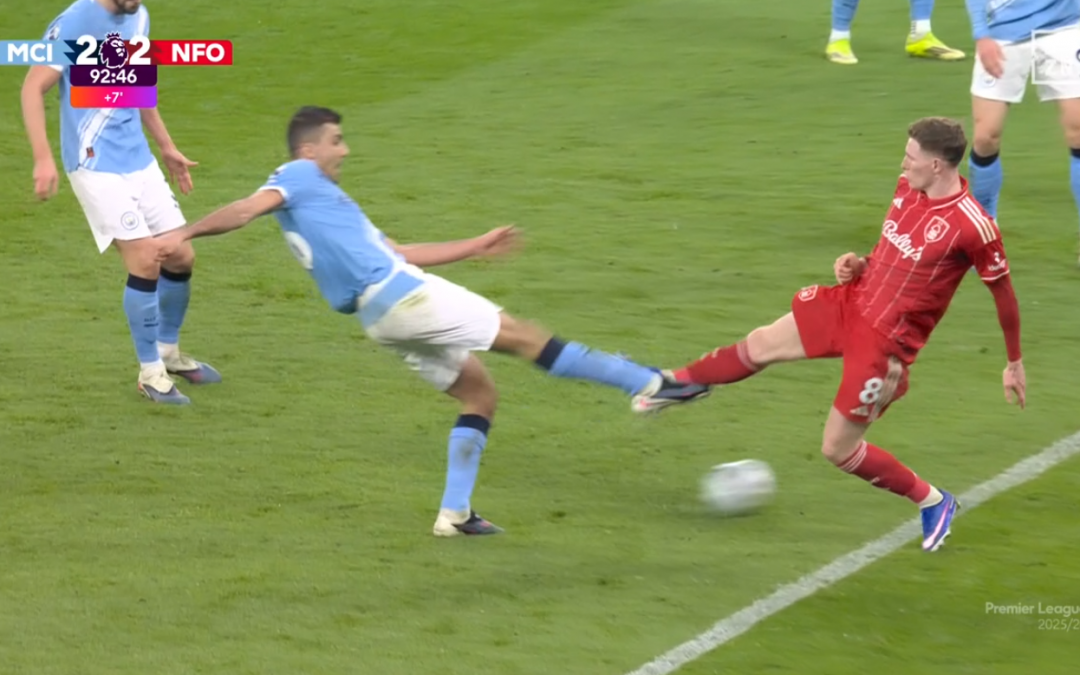
El Manchester City – Nottingham Forest dejó cuatro acciones para la polémicas en el interior de las áreas.
El empate 2-2 entre el Manchester City y el Nottingham Forest en el Etihad Stadium dejó mucho más que goles y emoción. El partido estuvo marcado por hasta cuatro acciones de posible penalti que generaron debate durante el encuentro y también después del pitido final.
El árbitro del encuentro, Darren England, optó por no señalar ninguna de las cuatro acciones, lo que provocó numerosas protestas por parte de jugadores y aficionados. Sin embargo, un análisis detallado de cada jugada muestra que tanto el colegiado como el VAR tomaron decisiones correctas en todas ellas.
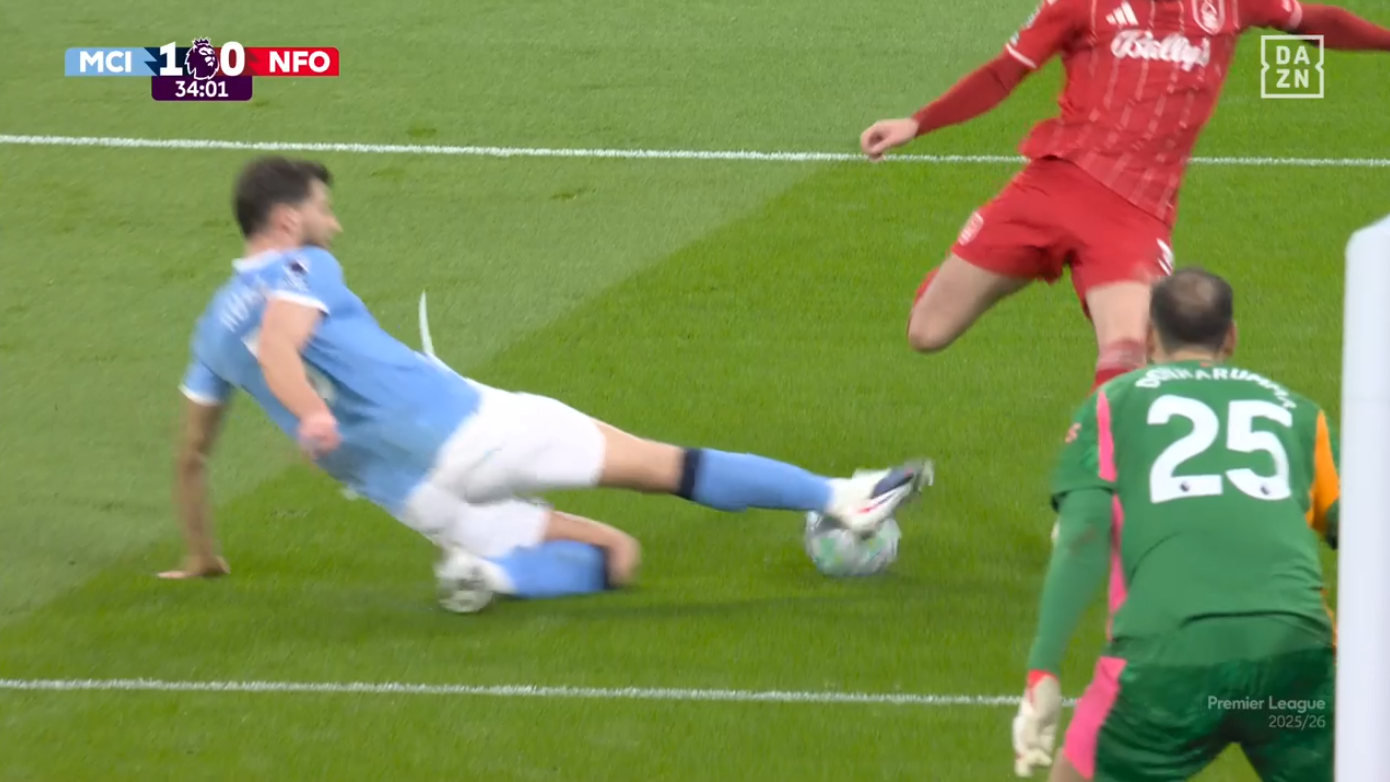
Minuto 33: acción entre Rúben Dias y Neco Williams
La primera acción polémica llegó en el minuto 33 dentro del área del Manchester City. Un balón dividido parecía quedar franco para Neco Williams, que se preparaba para rematar, pero Rúben Dias se anticipó lanzándose al suelo y despejando el balón con claridad. Tras el despeje, la pierna del defensor quedó ligeramente elevada como consecuencia natural del movimiento de barrida. En ese momento, cuando Williams intentó golpear el balón, impactó con la parte delantera de los tacos del defensor portugués.
Aunque el contacto puede parecer aparatoso en la repetición, se trata de un contacto residual tras una acción defensiva completamente limpia. Dias ya había despejado el balón y ninguno de los dos jugadores invade el espacio del otro de forma antirreglamentaria. Ambos simplemente confluyen en el mismo punto intentando jugar el balón. Por tanto, la decisión de dejar seguir el juego fue correcta. Es cierto que en otras competiciones este tipo de acciones a veces terminan sancionándose como penalti, pero según el reglamento no es una acción punible.
Minuto 70: el piscinazo de Haaland
La segunda acción polémica llegó en el minuto 70 y tuvo como protagonista a Erling Haaland. El delantero noruego recibió un balón al espacio y parecía quedarse mano a mano con el portero Matt Sels. Sin embargo, en lugar de intentar continuar la jugada, Haaland estiró la pierna derecha buscando el contacto con el guardameta, llegando incluso a golpearle en el rostro cuando el portero se lanzaba a intentar jugar el balón.
La acción es bastante clara: Haaland deja de intentar jugar el balón y busca el contacto de forma evidente. De hecho, tras caer al suelo, el propio delantero empezó a reírse, consciente de lo evidente de la situación. No solo no es penalti, sino que la decisión correcta habría sido señalar falta en ataque y mostrar tarjeta amarilla al delantero del City por simulación o comportamiento antideportivo. El árbitro decidió simplemente dejar seguir la jugada, evitando premiar la acción, aunque quizá habría sido conveniente sancionarla disciplinariamente.
⁉️💥 ¿Hay penalti de Matz Sels sobre Haaland?
✅ 𝗡𝗢.
👉🏻 El noruego se olvida del balón y suelta la pierna derecha, golpeando en el rostro del guardameta.
▪️ Penalti que sí habrían señalado en LaLiga EA Sports, pero en la Premier League no cuela. pic.twitter.com/CGg6GRtihk
— Archivo VAR (@ArchivoVAR) March 4, 2026
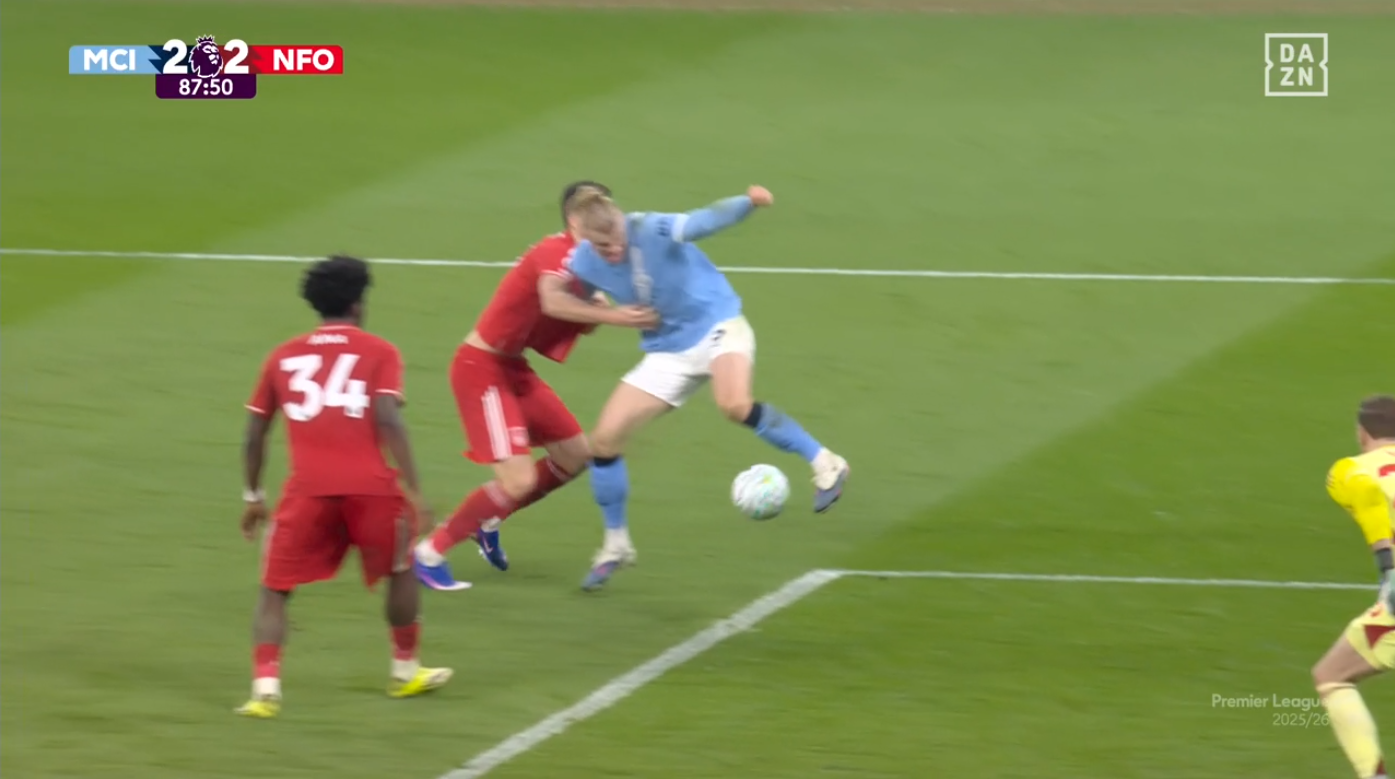
Minuto 87: posible agarrón sobre Haaland
La tercera jugada llegó en el minuto 87 tras un disparo algo desviado de Rodri desde la frontal. El balón terminó cayendo dentro del área, donde Haaland trataba de disputarlo con el defensor Nikola Milenkovic. En las imágenes se aprecia que Milenkovic agarra ligeramente al delantero del Manchester City, pero también se observa que Haaland responde agarrando la camiseta del defensor durante la disputa.
Además, existe un detalle clave que condiciona completamente la acción: Haaland parece encontrarse en fuera de juego en el momento en el que Rodri golpea el balón. En las tomas televisivas se aprecia bastante claramente que el delantero está adelantado respecto al último defensor. Si esa posición de fuera de juego se confirma, cualquier posible infracción posterior queda invalidada automáticamente. Por eso se trata de una jugada que ni siquiera llega realmente a ser analizable desde el punto de vista del penalti.
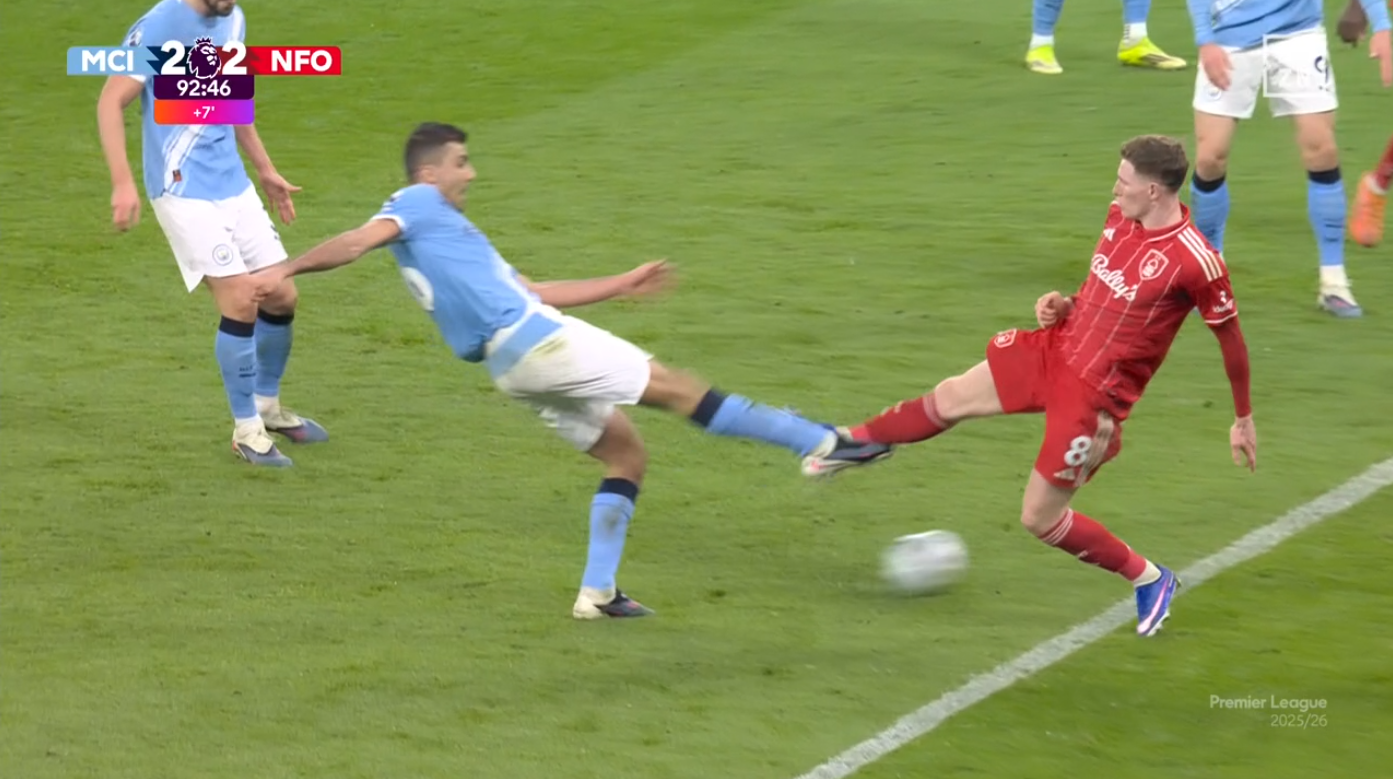
Minuto 92: choque entre Rodri y Elliot Anderson
La última acción polémica del partido llegó ya en el tiempo añadido. Tras un despeje defectuoso de la defensa del Nottingham Forest, el balón quedó muerto dentro del área y Rodri llegó para rematar. El centrocampista del City golpeó el balón y, en el movimiento posterior al disparo, su pierna impactó con la de Elliot Anderson, que intentaba bloquear el remate.
La imagen puede parecer aparatosa, con dos piernas extendidas chocando dentro del área, pero el detalle fundamental es que Rodri ya había rematado el balón antes del contacto. Es decir, la jugada ofensiva ya se había completado. Anderson estira la pierna intentando bloquear el disparo, mientras que Rodri continúa su movimiento natural tras el golpeo. No hay patada violenta, ni entrada con fuerza excesiva, ni una acción que impida el remate del jugador del City. De hecho, es el propio Rodri quien termina golpeando la pierna de Anderson durante el movimiento de su disparo. Según el reglamento, se trata de un contacto completamente incidental y no sancionable.
Balance final
Pese a las cuatro acciones de posible penalti y al enorme debate generado tras el partido, el balance arbitral fue positivo. Darren England y el equipo de VAR tomaron decisiones correctas en todas las jugadas relevantes del encuentro.
La única decisión discutible fue la ausencia de tarjeta amarilla para Haaland por su evidente simulación en la segunda acción polémica. Más allá de ese detalle disciplinario, el arbitraje del encuentro fue sólido y coherente con el reglamento. En un partido cargado de tensión, polémica y con un gol decisivo en el descuento, el equipo arbitral supo mantener el control y resolver correctamente todas las acciones clave.
🇬🇧 Read full English version
Four penalty appeals in Manchester City vs Nottingham Forest: what the referee got right
The Premier League clash between Manchester City and Nottingham Forest at the Etihad Stadium ended in a dramatic 2–2 draw, but much of the post-match debate focused on the refereeing decisions. The game featured four separate penalty appeals across both penalty areas, several of them highly controversial and widely discussed among fans and pundits.
Referee Darren England was at the center of the discussion after allowing play to continue in every single case. Despite the controversy, a closer look at each situation suggests that the referee and VAR team actually handled the incidents correctly.
Minute 33: Ruben Dias challenge on Neco Williams
The first penalty appeal came in the 33rd minute inside Manchester City’s box. A loose ball dropped toward Neco Williams, who looked ready to strike, but Ruben Dias reacted quickly and slid in to clear the ball.
Dias clearly reached the ball first and successfully played it away. After the clearance, his foot remained slightly raised due to the natural motion of the sliding action. When Williams attempted to shoot, his foot collided with the front of Dias’ boot.
At first glance the contact looked dramatic, but it was a classic residual contact following a legitimate defensive action. Dias had already cleared the ball and neither player invaded the other’s space unfairly. Both simply converged on the same point in their attempt to play the ball.
For that reason, the decision to allow play to continue was correct. It is the type of situation that sometimes leads to penalties in other competitions, but by the Laws of the Game it is not a punishable offence.
Minute 70: Haaland’s dive
The second controversial moment arrived in the 70th minute and involved Erling Haaland.
Haaland ran onto a through ball and appeared to be through on goal against goalkeeper Matz Sels. Instead of attempting to continue the play, however, the Norwegian striker stretched his right leg toward the goalkeeper and made contact with Sels’ face as the goalkeeper dived for the ball.
The contact was clearly initiated by Haaland, who had already abandoned any realistic attempt to play the ball. After going down, the striker even appeared to laugh at the situation, highlighting the lack of genuine foul in the play.
Not only was this not a penalty, but the correct decision from a disciplinary perspective would have been to award a free kick to Nottingham Forest and show Haaland a yellow card for simulation or unsporting behaviour.
The referee chose to simply allow play to continue, which avoided rewarding the dive but arguably missed the opportunity to sanction it properly.
Minute 87: Possible hold on Haaland
The third appeal came late in the match when a shot from Rodri deflected toward Haaland inside the penalty area. As the ball dropped, Forest defender Nikola Milenkovic appeared to be holding the striker.
This incident is particularly interesting because both players were holding each other during the phase of play. Milenkovic initially grabbed Haaland, but the City striker also pulled his opponent’s shirt while trying to gain position.
More importantly, the television replay strongly suggests that Haaland was in an offside position when Rodri struck the ball. If that is the case, the potential holding offence becomes irrelevant because the attacking phase itself would already be invalid.
Given the apparent offside position and the mutual holding between both players, it is understandable why the referee and VAR allowed the play to continue.
Minute 92: Rodri and Elliot Anderson collision
The most debated moment of the night occurred in stoppage time. After a partial defensive clearance, Rodri arrived inside the box and struck the ball toward goal. Immediately after the shot, his leg collided with that of Elliot Anderson.
At first sight the contact looked heavy: two extended legs clashing inside the penalty area. However, the key detail is the sequence of events. Rodri had already completed his shot before the contact occurred, meaning the attacking action had already been executed.
Anderson extended his leg in an attempt to block the shot, while Rodri’s follow-through simply carried his leg into the defender. There was no reckless tackle, no excessive force and no action that prevented Rodri from shooting.
In fact, it was Rodri who ultimately struck Anderson’s leg during the natural follow-through of his shot. Under the laws of the game, this type of contact is considered incidental and not punishable.
Final assessment
Although the match produced four penalty appeals and plenty of debate afterwards, the overall officiating performance was strong. Referee Darren England and the VAR team handled each situation correctly according to the Laws of the Game.
The only real criticism concerns the lack of a yellow card for Haaland’s obvious dive in the second incident. Aside from that disciplinary detail, the key decisions throughout the match were accurate.
In a game filled with pressure, controversy and a dramatic late equaliser, the officiating team delivered a calm and consistent performance.