
Toda la polémica en la Premier League: el derbi de Londres entre Arsenal y Chelsea marca la jornada
La jornada en la Premier League volvió a colocar al arbitraje en el centro del debate. Hubo acciones discutidas en distintos estadios, pero el foco se concentró inevitablemente en el derbi londinense entre Arsenal FC y Chelsea FC. Un partido grande, con liderato en juego y con un contexto competitivo que no admite demasiados tropiezos. Y, precisamente por eso, cada decisión adquiere un peso mayor.
El Arsenal defendía su posición en lo más alto de la tabla. El margen de error es mínimo cuando la presión por mantener el liderato aprieta. En ese escenario, dos acciones antes y después del descanso terminaron marcando el relato del encuentro.
45′: un penalti que no existió… en el criterio arbitral
Justo antes del descanso, con el 1-0 en el marcador, se produce la primera gran acción polémica. Declan Rice impide a Hato disputar el balón dentro del área. Hay un primer contacto claro que dificulta la disputa y, en el mismo movimiento, el mediocentro saca el codo y termina desviando el balón. Una acción que combina obstaculización y contacto con el brazo en una misma secuencia.
La jugada reúne suficientes elementos como para ser revisada con lupa. Sin embargo, ni Darren Englend en el campo ni John Brooks desde el VAR consideraron oportuno intervenir. El partido se fue al descanso sin revisión en monitor y con la sensación de que el Chelsea había perdido una oportunidad evidente de equilibrar el marcador antes del intermedio.
En un derbi de esta magnitud, que una acción de ese calibre no tenga ni siquiera revisión visible genera una sensación difícil de justificar.
🖥️💥 El doble penalti de Declan Rice que el VAR dejó pasar en el Arsenal – Chelsea.
👉🏻 El jugador inglés impide a Hato disputar el balón y, además, desvía el balón con el codo.
❌ 𝗘𝗦 𝗣𝗘𝗡𝗔𝗟𝗧𝗜.
▪️ Incomprensible la pasividad de John Brooks desde el VAR. pic.twitter.com/VtFnYi8Ok5
— Archivo VAR (@ArchivoVAR) March 1, 2026
52′: un agarrón sostenido que tampoco fue penalti
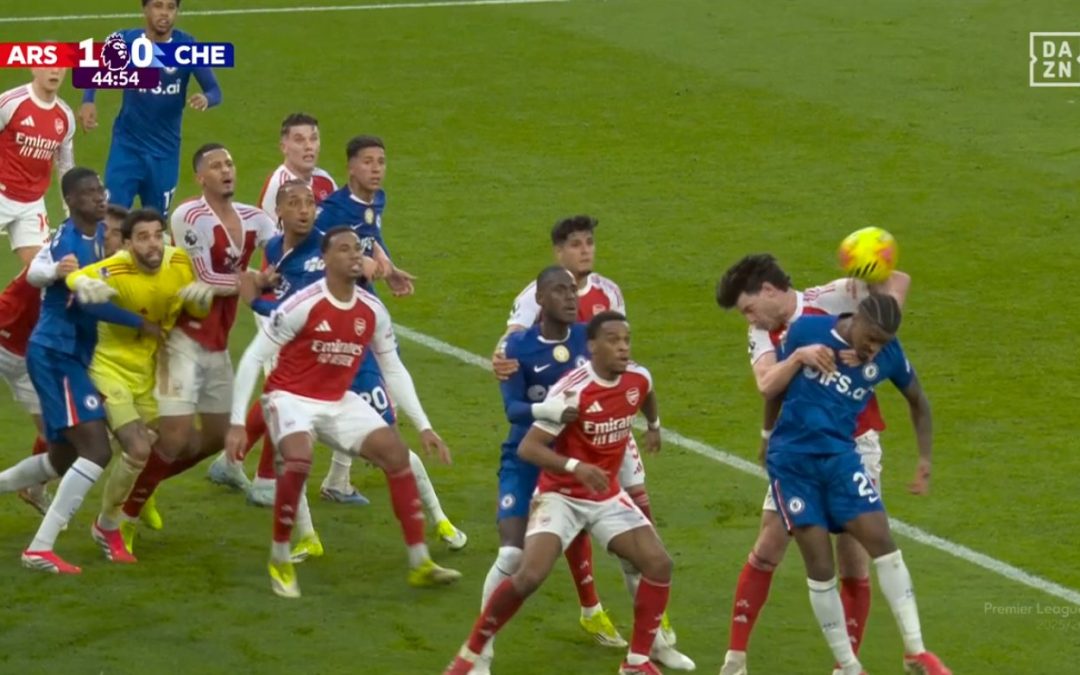
La segunda acción llega poco después del descanso. Balón parado, envío cerrado al área y William Saliba sujetando de forma continuada a Joao Pedro. No es un contacto puntual ni una disputa natural de posición. Es un agarrón reiterado, con ambos brazos implicados, que limita claramente la capacidad del delantero para atacar el balón.
El tipo de sujeción que el reglamento contempla como sancionable cuando impide disputar el esférico. En esta ocasión, tampoco hubo señalización. Ni penalti, ni llamada al monitor.
El contexto agrava la percepción: de haberse señalado, el Chelsea habría tenido la opción de ponerse 1-2 y cambiar completamente la dinámica del partido. Dos acciones en el mismo encuentro, ambas dentro del área del Arsenal, ambas sin revisión formal. Demasiada coincidencia para un choque de esta trascendencia.
🖥️💥 El VAR decidió permitir acciones de rugby en el Emirates Stadium.
👉🏻 Saliba sujeta de forma continuada a João Pedro, impidiéndole llegar al balón.
❌ 𝗣𝗘𝗡𝗔𝗟𝗧𝗜 𝗖𝗟𝗔𝗥𝗢.
▪️ La Premier League está perdiendo el control con las infracciones en los saques de esquina. pic.twitter.com/OnUFicFwFL
— Archivo VAR (@ArchivoVAR) March 1, 2026
En Old Trafford, penalti y roja en una acción discutible
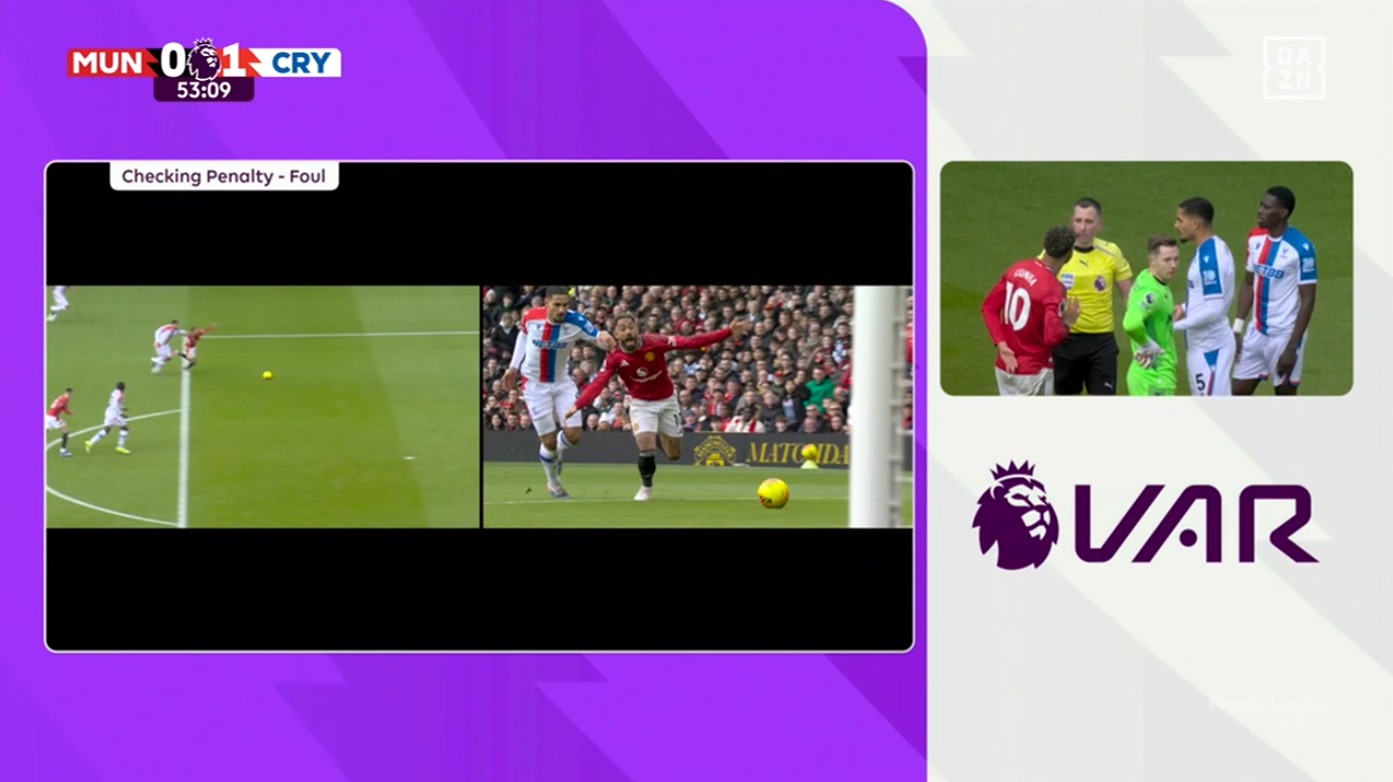
La tercera jugada relevante de la jornada tuvo lugar en el duelo entre Manchester United y Crystal Palace. Pase en profundidad hacia Mateus Cunha, primer agarrón claro de Lacroix fuera del área que condiciona la carrera, y continuación de la acción hasta dentro del área, donde el contacto se reduce a una mano ligera sobre el hombro.
Cunha cae y el árbitro Chris Kavanagh señala penalti. Posteriormente, tras revisión, se mantiene la infracción y se añade la expulsión por considerar ocasión manifiesta de gol. La dificultad radica en que el contacto determinante dentro del área es leve y discutible. El agarrón más evidente se produce fuera, pero al entender que la acción continúa, la decisión final termina siendo penalti y roja.
Aquí el debate es más interpretativo que estructural. El VAR actúa bajo el criterio del árbitro de campo y la revisión responde a la valoración de una acción peligrosa. Puede discutirse la apreciación, pero el procedimiento fue visible.
En el post-partido, el entrenador del Crystal Place declaró lo siguiente: «La tarjeta roja cambió por completo el curso del partido. Fue una decisión muy difícil, el penalti y la tarjeta roja porque la falta empezó fuera del área y normalmente la falta se debe pitar donde empezó».
En Craven Cottage, un gol que nace de una falta previa
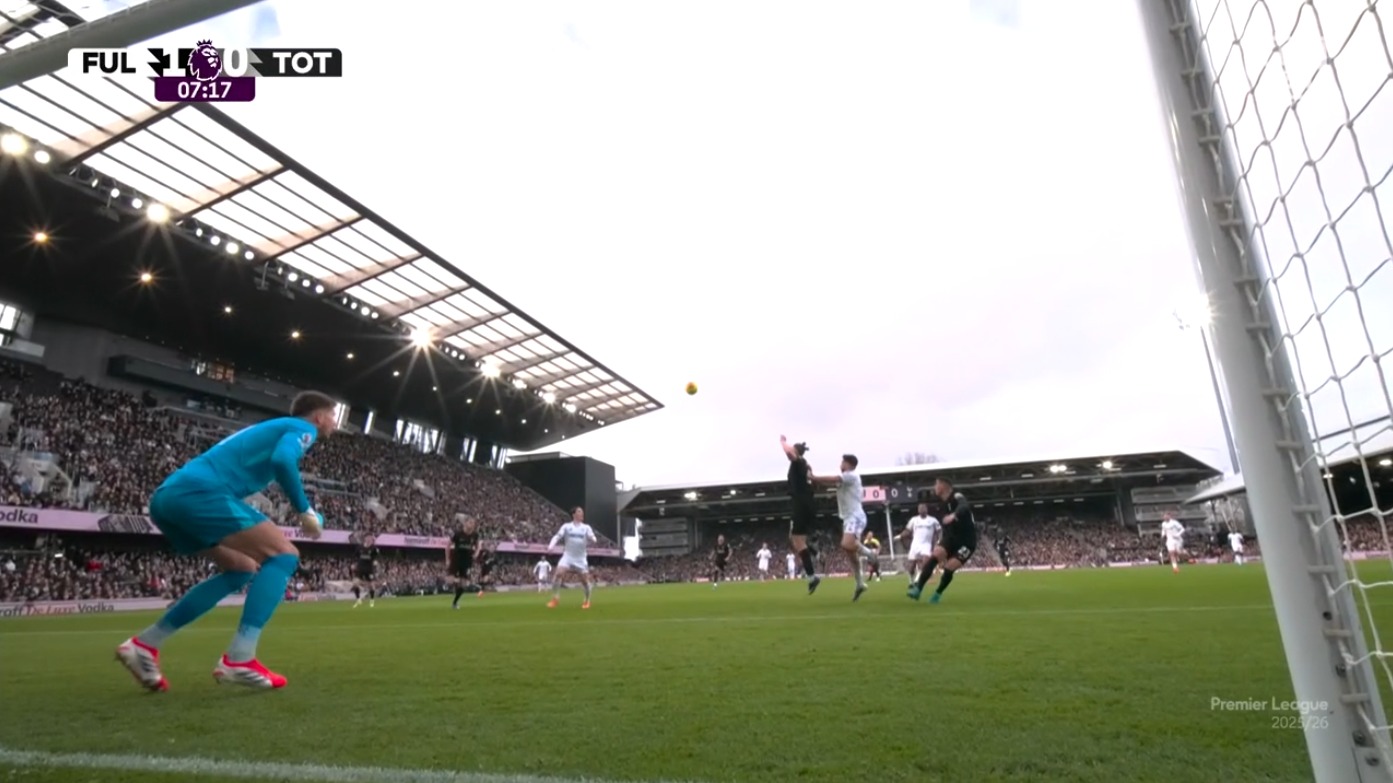
La polémica continuó en el duelo entre Fulham FC y Tottenham Hotspur, el primer gol del partido también dejó una acción discutible en el minuto 6. Centro lateral al área, duelo aéreo entre Radu Dragusin y Raúl Jiménez, con el delantero partiendo desde atrás.
Jiménez coloca la mano en la espalda del central y le empuja lo suficiente para impedir que pueda imponerse en el salto y despejar con claridad. Esa pequeña pero decisiva acción le permite ganar la posición y peinar el balón, generando la asistencia que termina en el gol de Harry Wilson.
El empujón es sutil pero efectivo. Dificulta el despeje y condiciona directamente la jugada posterior. Ni el árbitro Paul Tierney ni el VAR consideraron que la acción fuera punible. El gol subió al marcador y la falta previa quedó fuera de foco.
🇬🇧 Read full English version
All the controversy in the Premier League: the London derby between Arsenal and Chelsea defines Matchday 28
Matchday 28 in the Premier League once again placed refereeing at the center of debate. There were controversial moments in different stadiums, but the spotlight inevitably focused on the London derby between Arsenal FC and Chelsea FC. A major clash, with the title race at stake and within a competitive context that leaves little room for error. And precisely because of that, every decision carries even greater weight.
Arsenal were defending their position at the top of the table. The margin for error is minimal when the pressure of maintaining the lead intensifies. In that scenario, two key incidents before and after halftime ended up shaping the narrative of the match.
Minute 45: a penalty that did not exist… under the referee’s interpretation
Just before halftime, with the score at 1-0, the first major controversial moment occurred. Declan Rice prevented Hato from challenging for the ball inside the penalty area. There is an initial clear contact that hinders the challenge and, in the same movement, the midfielder extends his elbow and deflects the ball. An action that combines obstruction and arm contact in a single sequence.
The incident contained enough elements to warrant a detailed review. However, neither Darren England on the pitch nor John Brooks in the VAR booth deemed it necessary to intervene. The game went into halftime without an on-field review and with the feeling that Chelsea had lost a clear opportunity to level the score before the break.
In a derby of this magnitude, an incident of that scale not even receiving a visible review creates a perception that is difficult to justify.
Minute 52: a sustained holding that was not given as a penalty
The second incident came shortly after halftime. From a set piece delivery into the box, William Saliba was seen holding João Pedro for an extended period. It was not a brief or natural positional duel. It was a repeated hold, involving both arms, clearly limiting the striker’s ability to attack the ball.
This type of holding is contemplated in the Laws of the Game as punishable when it prevents a player from challenging for the ball. On this occasion, once again, there was no decision. No penalty, no VAR recommendation for an on-field review.
The context amplifies the perception: had it been awarded, Chelsea would have had the opportunity to take a 1-2 lead and completely change the dynamic of the match. Two incidents in the same game, both inside Arsenal’s penalty area, both without a formal review. Too much coincidence for a match of such significance.
At Old Trafford: penalty and red card in a debatable situation
The third key moment of the matchday occurred in the game between Manchester United and Crystal Palace. A through ball was played towards Matheus Cunha, with a clear initial hold by Lacroix outside the penalty area that affected his run. The play continued into the box, where the contact was reduced to a light hand on the shoulder.
Cunha went down and referee Chris Kavanagh awarded a penalty. Following a VAR review, the decision was upheld and a red card was added for denying an obvious goal-scoring opportunity. The difficulty lies in the fact that the decisive contact inside the area is minimal and debatable. The more evident hold occurred outside, but as the action was interpreted as continuing, the final decision resulted in a penalty and red card.
Here, the debate is more interpretative than structural. The VAR operated under the on-field referee’s judgment and the review followed the evaluation of a dangerous attacking situation. The assessment can be debated, but the procedure itself was visible.
“The red card completely changed the course of the game. It was a very difficult decision — the penalty and the red card — because the foul started outside the box, and normally the foul should be given where it began.”
At Craven Cottage: a goal originating from a prior foul
Controversy continued in the match between Fulham FC and Tottenham Hotspur, as the first goal of the game also featured a debated moment in the 6th minute. A cross into the penalty area led to an aerial duel between Radu Drăgușin and Raúl Jiménez, with the striker approaching from behind.
Jiménez placed his hand on the defender’s back and pushed just enough to prevent him from asserting himself in the jump and clearing the ball properly. That subtle but decisive action allowed him to win position and flick the ball on, creating the assist that resulted in Harry Wilson’s goal.
The push is slight but effective. It hinders the clearance and directly influences the subsequent play. Neither referee Paul Tierney nor the VAR considered the action punishable. The goal stood, and the preceding foul went largely unnoticed.